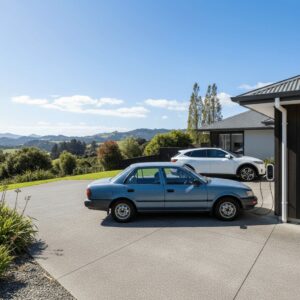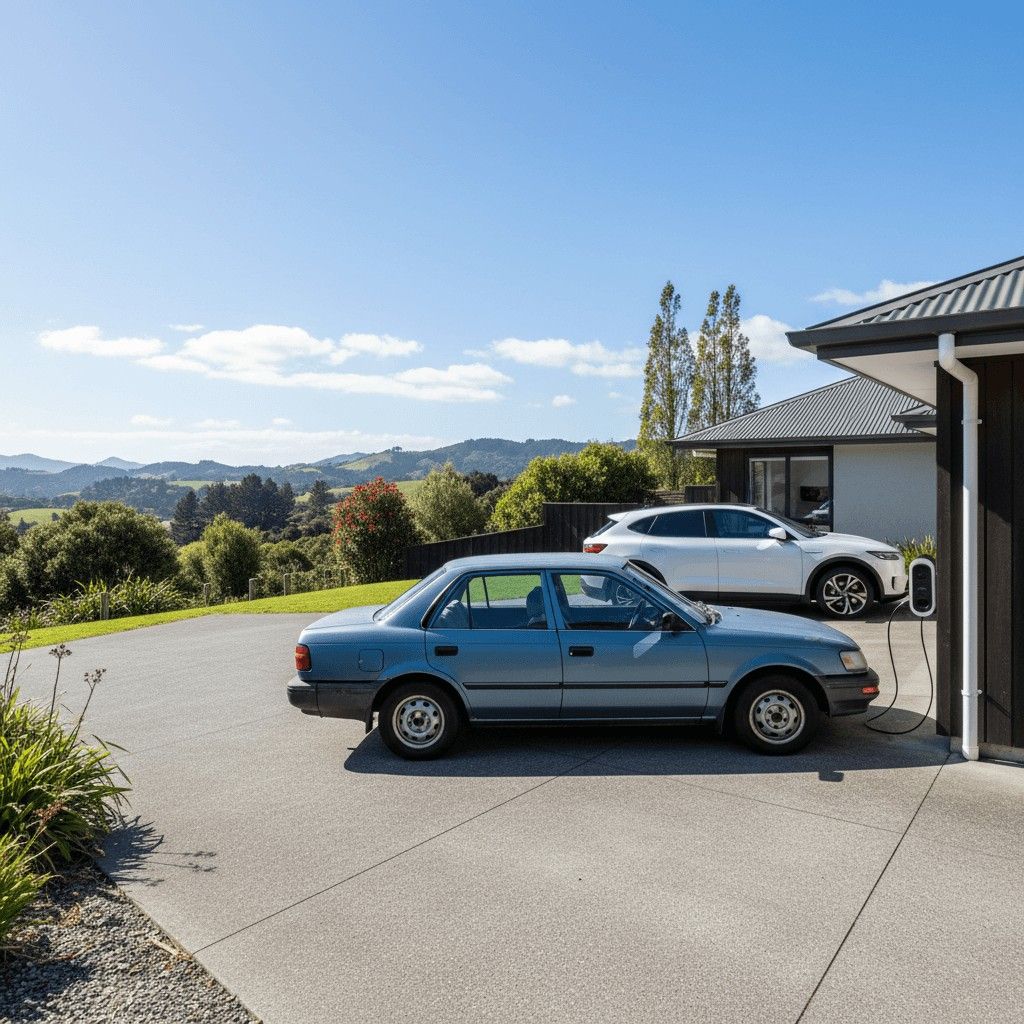
New Zealand’s shift toward electric vehicles is accelerating. With the clean car discount now firmly established and charging infrastructure expanding across both islands, more Kiwi drivers are making the jump from petrol to electric. But once you’ve ordered your new EV, you’re left with a practical question: what do you actually do with the old petrol car sitting in the driveway?
The answer depends on your car’s condition, age, and how much effort you want to put in. Here’s a realistic breakdown of your options.
The State of NZ’s EV Transition
EV registrations in New Zealand have grown significantly over the past few years. Government policy, rising fuel costs, and improving battery range have all played a role. The clean car standard requires importers to progressively lower the average emissions of vehicles they bring into the country, which means the new car market is tilting toward EVs and hybrids whether consumers drive the change or not.
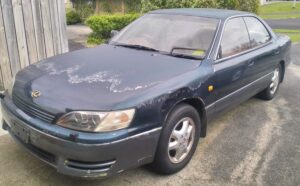
What this means in practice is that thousands of older petrol and diesel vehicles are being replaced each year. Many of these aren’t trade-in candidates at a dealership. They’re 15 or 20-year-old Japanese imports with high mileage, faded paint, and a WoF that’s about to expire. The question of what to do with them is one an increasing number of New Zealanders will face.
Option 1: Sell It Privately
If your car is still roadworthy with a current WoF and registration, private sale through Trade Me or Facebook Marketplace is an option. You’ll typically get the highest price this way, but it comes with trade-offs. You need to photograph the car, write a listing, field messages from tyre-kickers, arrange viewpoint times, and deal with no-shows. For a car worth $3,000 or more, this effort can be worthwhile. For anything under that, the time investment often outweighs the extra money.
There’s also the liability question. Until you formally transfer ownership through NZTA, you remain the registered owner. If the buyer doesn’t complete the transfer and racks up fines or is involved in an incident, the paperwork trail leads back to you.
Option 2: Trade It In at a Dealership
Some EV dealerships will accept your old petrol car as a trade-in, but expectations need to be realistic. Dealerships have no interest in retailing a tired 2008 Corolla. If they take it at all, they’ll offer bottom dollar because they’re going to wholesale it or send it to auction. For newer vehicles in good condition, a trade-in can be convenient. For older cars, the offer is often so low it’s barely worth the conversation.
Option 3: Wreck It for Cash
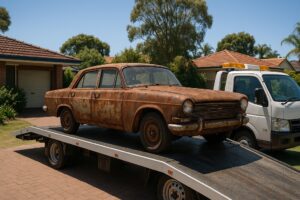
For vehicles that are no longer economically worth repairing, non-running, deregistered, or simply too old and tired to sell privately, a car wrecking service is often the most practical choice. Licensed wreckers will assess your vehicle based on its weight, make, model, and the current scrap metal market. They handle collection, usually for free, and pay you on the spot.
The process is straightforward. You get a quote, they send a truck, and the car is gone the same day. The wrecker then dismantles the vehicle responsibly: draining fluids for proper disposal, recycling metals, and processing the remaining materials according to environmental regulations.
For vehicle owners making the switch to electric, Trentham Wreckers offers top cash for cars in Wellington which handles the entire process, including free pickup across the Wellington region and same-day payment. It’s a clean way to close the chapter on your old car without the hassle of private sales or lowball dealer offers.
Option 4: Donate It
A handful of organisations in New Zealand accept vehicle donations, though this option is less common than in countries like the United States. Some charities will take running vehicles and either use them operationally or sell them to fund their work. If your car still drives and you’re not concerned about getting cash for it, this can be a worthwhile option. Just make sure you complete the ownership transfer properly.
What About Leaving It on the Property?
This is the option too many people choose by default, and it’s the worst one. An old car sitting on a lawn or down the side of a house isn’t just an eyesore. It slowly leaks oil, coolant, brake fluid, and battery acid into the soil. Tyres degrade and release microplastics. If it’s on public land or visible from the street, your local council may issue fines for an abandoned vehicle.
Under New Zealand law, the registered owner remains responsible for a vehicle until it’s formally deregistered through Waka Kotahi. “Out of sight, out of mind” doesn’t remove your legal obligations.
How to Prepare Your Car for Disposal
Regardless of which option you choose, there are a few things to take care of before your old car leaves:
- Remove personal belongings. Check the glovebox, under seats, the boot, and any storage compartments. It’s easy to forget things like sunglasses, toll tags, or parking cards.
- Take the plates off if you’re scrapping or wrecking the car. You can return them to NZTA or keep them if you plan to transfer them.
- Cancel or transfer your insurance. No point paying premiums on a car you no longer own.
- Gather your paperwork. The ownership papers, WoF history, and any service records make the process smoother regardless of disposal method.
- Deregister the vehicle through Waka Kotahi if you’re not transferring ownership to a buyer. Many wreckers handle this step for you.
Making the Switch Count
Moving to an electric vehicle is a meaningful step, both financially and environmentally. But the environmental benefit is undermined if the old petrol car ends up rotting on a back section, leaking fluids into the ground for the next decade. Completing the transition properly means responsibly disposing of the vehicle you’re replacing.
Whether you sell it, trade it in, wreck it for cash, or donate it, the important thing is that it goes through proper channels. Your old car still has value, either to a private buyer, as parts and materials, or as recycled metal. Making sure that value gets extracted responsibly is the last thing you can do for a vehicle that served you well.